
Oppositional Defiant Disorder (ODD) is a behavioral condition that affects how some children respond to authority, expectations, and frustration. Students with ODD may struggle with emotional regulation, compliance, and conflict with adults or peers. These challenges can significantly impact how a student experiences school, especially in traditional classroom environments.
Understanding Oppositional Defiant Disorder and its impact on learning is an important step for parents and educators who want to provide supportive, effective educational environments where students can grow academically and emotionally.
What Is Oppositional Defiant Disorder?
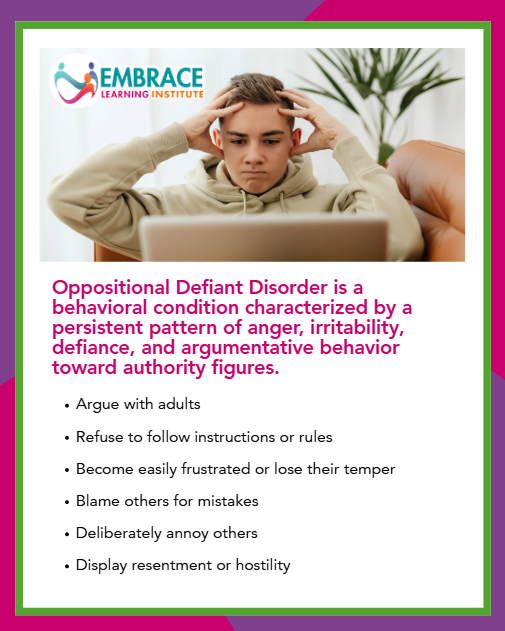
Oppositional Defiant Disorder is a behavioral condition characterized by a persistent pattern of anger, irritability, defiance, and argumentative behavior toward authority figures.
Children with ODD may frequently:
- Argue with adults
- Refuse to follow instructions or rules
- Become easily frustrated or lose their temper
- Blame others for mistakes
- Deliberately annoy others
Display resentment or hostility
How ODD Impacts Learning
Students with Oppositional Defiant Disorder are often capable learners, but their behavioral and emotional challenges can interfere with the learning process.
The impact of ODD on learning may appear in several ways.
Difficulty with Authority and Classroom Structure
Traditional classrooms rely heavily on compliance with rules, instructions, and routines. For students with ODD, authority figures can unintentionally trigger feelings of frustration or opposition.
This can lead to:
-
Refusing to complete assignments
-
Challenging instructions
-
Power struggles with teachers
-
Difficulty accepting feedback or correction
When these patterns occur frequently, academic progress may suffer even when the student has the ability to understand the material.
Emotional Regulation Challenges
Students with ODD often experience strong emotional reactions to frustration, disappointment, or perceived criticism.
In school environments, this may appear as:
Emotional outbursts
Shutting down during difficult tasks
Avoiding challenging work
Escalating conflicts with peers or adults
When a student becomes emotionally overwhelmed, their brain shifts into a stress response, making it difficult to focus, process information, or retain new material.
Difficulty with Transitions and Expectations
Transitions between activities, changes in routine, or unclear expectations can be particularly challenging for students with ODD.
Students may resist:
Moving from one activity to another
Following multi-step instructions
Participating in group activities
Completing tasks they find frustrating
These moments of resistance are often misunderstood as defiance when they may actually reflect stress, anxiety, or difficulty managing expectations.
Impact on Relationships and Social Learning
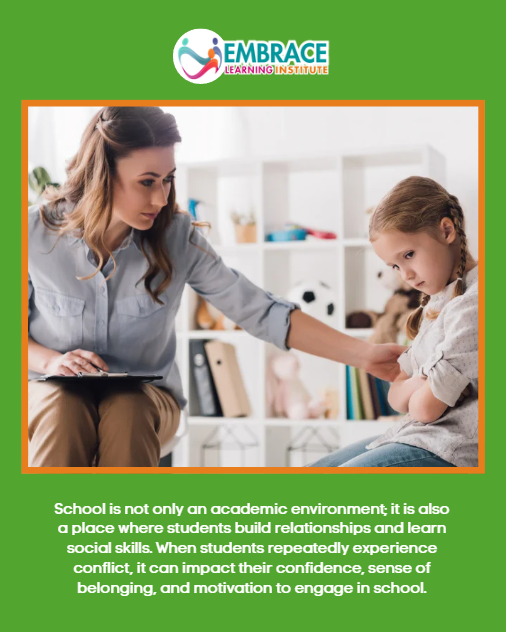
School is not only an academic environment; it is also a place where students build relationships and learn social skills.
Students with ODD may experience:
- Conflict with peers
- Difficulty cooperating in group settings
- Frustration during collaborative activities
- Social isolation
When students repeatedly experience conflict, it can impact their confidence, sense of belonging, and motivation to engage in school.
Strengths of Students with ODD
While ODD is often discussed in terms of behavioral challenges, many students with ODD also possess important strengths.
These may include:
Strong independence
Determination and persistence
A willingness to question systems or ideas
Creative problem-solving
Leadership qualities when properly supported
When students feel respected and understood, these traits can become powerful strengths.
Support Strategies for Students with ODD
Students with Oppositional Defiant Disorder often respond best to environments that focus on structure, respect, and collaborative problem-solving rather than strict control or punishment.
Effective strategies may include:
Clear and Consistent Expectations
Predictable routines and clear expectations help reduce uncertainty and frustration.
Collaborative Communication
Students with ODD often respond better when they feel included in problem-solving rather than controlled.
Choice and Autonomy
Offering choices within structured boundaries can reduce power struggles and increase cooperation.
Emotional Regulation Support
Teaching coping strategies such as breathing techniques, movement breaks, or quiet reset spaces can help students manage frustration.
Positive Reinforcement
Recognizing effort, progress, and positive behavior encourages motivation and builds confidence.
Why Learning Environments Matter
For students with ODD, the learning environment plays a major role in their ability to succeed.
Large classrooms, rigid rules, and limited flexibility can sometimes intensify power struggles and frustration.
Supportive educational environments often include:
- Smaller class sizes
- Flexible teaching approaches
- Relationship-based instruction
- Opportunities for movement and hands-on learning
- Educators trained in behavioral and emotional support strategies
When students feel respected and supported, their willingness to engage in learning often increases dramatically.
How Embrace Learning Institute Supports Students with ODD
At Embrace Learning Institute (ELI), we understand that behavior is often a form of communication. Students who struggle with frustration, emotional regulation, or authority may benefit from environments that prioritize understanding, structure, and individualized support.
ELI focuses on:
- Small classroom environments
- Individualized learning approaches
- Hands-on and project-based learning
- Support for emotional regulation and behavioral development
- Collaborative partnerships with families
Rather than focusing solely on behavior correction, our approach emphasizes helping students develop the skills they need to manage challenges, communicate effectively, and build confidence in their abilities.
When Families Begin Seeking Additional Support
Families may begin exploring alternative educational options when they notice that their child is:
- Frequently in conflict with teachers or school staff
- Struggling with frustration or emotional regulation
- Feeling misunderstood or labeled as “difficult”
- Capable academically but disengaged from school
- Experiencing repeated disciplinary actions
Understanding the role of Oppositional Defiant Disorder in learning can help families identify educational environments that are better suited to their child’s needs.
Final Thoughts
Oppositional Defiant Disorder can present challenges in traditional classroom environments, but it does not define a student’s potential. With the right support, structure, and understanding, students with ODD can develop strong academic skills, emotional regulation strategies, and positive relationships with educators and peers.
At Embrace Learning Institute, we believe that education works best when it adapts to the student. By creating supportive, flexible learning environments, we help students move beyond frustration and rediscover curiosity, confidence, and engagement in learning.