
Applied Behavioral Analysis, commonly known as ABA, is one of the most widely recognized therapeutic approaches used to support children with autism and other developmental differences. While ABA has evolved significantly over the years, understanding what it is — and what it is not — helps families make informed decisions about the types of support that best fit their child’s needs.
This article explains ABA in clear, accessible terms while honoring the diverse perspectives, experiences, and needs within the neurodivergent community.
What Is ABA?
ABA is a structured, evidence-based approach that focuses on understanding behavior and teaching new skills through reinforcement, skill-building, and environmental support. It is most commonly used with autistic children but can also support individuals with ADHD, intellectual disabilities, communication challenges, or behavioral needs.
The goal of ABA — when practiced ethically and compassionately — is to help children build independence, communication skills, social connections, and emotional regulation.
How ABA Works
ABA is based on the foundational idea that behavior is influenced by what happens:
Before it (the trigger or environment)
During it (the behavior itself)
After it (the response or consequence)
By studying these patterns, behavior specialists help identify:
Skills a child is trying to learn
Barriers that may be causing frustration
Strategies that support emotional regulation and safety
Ways to replace challenging behaviors with more effective ones
ABA sessions often focus on breaking skills into small, achievable steps and reinforcing positive behaviors with encouragement, praise, or natural rewards.
Common Areas ABA Supports
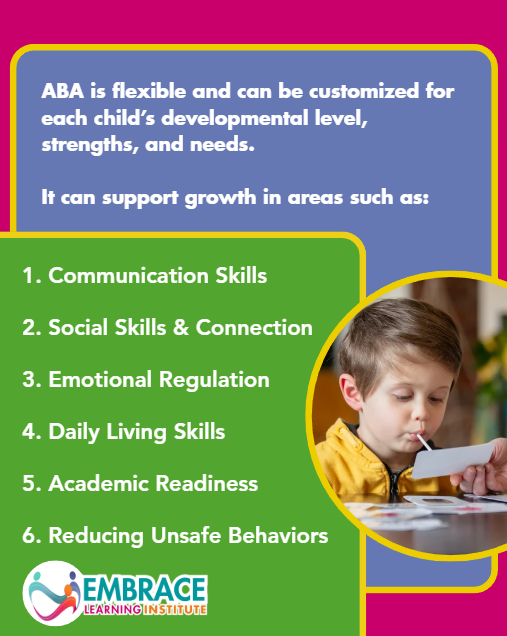
ABA is flexible and can be customized for each child’s developmental level, strengths, and needs. It can support growth in areas such as:
1. Communication Skills
Teaching functional communication — spoken language, AAC (Augmentative and Alternative Communication), gestures, or other methods.
2. Social Skills & Connection
Supporting turn-taking, shared play, reading social cues, and building relationships.
3. Emotional Regulation
Helping children identify emotions, cope with stress, and manage overwhelming situations.
4. Daily Living Skills
Routines like dressing, eating, hygiene, organization, or transitions.
5. Academic Readiness
Focused attention, following directions, and task initiation.
6. Reducing Unsafe Behaviors
Addressing behaviors such as eloping, aggression, or self-harm in a way that centers safety and compassion.
Modern ABA vs. Traditional ABA
It is important to acknowledge that ABA has a complex history. Many autistic adults have spoken out about harmful experiences with outdated, compliance-focused methods.
Modern ABA, when practiced ethically, is significantly different. It prioritizes:
Child-led learning
Consent and participation
Emotional regulation
Respect for autonomy
Use of natural reinforcement
Avoiding harmful or compliance-based practices
Supporting communication, not “masking”
Creating safe and trauma-informed environments
Families should feel empowered to ask questions, express concerns, and ensure any ABA provider uses current, compassionate, neurodiversity-affirming practices.
Who Provides ABA?
ABA therapy is typically delivered by a trained professional such as:
BCBA (Board Certified Behavior Analyst)
BCaBA (Assistant Behavior Analyst)
RBT (Registered Behavior Technician), supervised by a BCBA
These professionals work closely with families, teachers, and support teams to help children generalize skills across home, school, and community settings.

What ABA Looks Like in Practice
ABA sessions vary depending on the child’s needs and age. They may include:
One-on-one sessions
Structured play
Natural environment teaching
Functional Behavior Assessments (FBAs)
Parent training and coaching
School consultations
Data collection to track progress
Sessions can take place at home, in clinics, at school, or in community settings.
Benefits of ABA When Done Well
When child-centered and trauma-informed, ABA can help:
Strengthen communication skills
Reduce frustration and meltdowns
Improve daily routines
Increase independence
Foster social confidence
Support emotional well-being
It should always enhance a child’s quality of life — never diminish it.

Questions Families Should Ask Providers
To ensure safe, ethical ABA, parents may ask:
How do you incorporate my child’s interests?
Do you use punishment or compliance-based strategies?
How do you teach self-advocacy?
How do you involve families in decision-making?
How do you support communication, including AAC?
What does reinforcement look like?
How do you respect autonomy and boundaries?
These conversations help families choose a provider aligned with their values.
Where ABA Fits Into a Comprehensive Support Plan
ABA is just one possible support. Many children benefit from a combination of:
Occupational therapy
Speech-language therapy
Social skills groups
Mental health counseling
Trauma-informed school support
Sensory integration strategies
Academic tutoring or accommodations
The best approach is layered, individualized, and collaborative.
Applied Behavioral Analysis, when practiced through a modern, neurodiversity-affirming lens, can be a powerful tool for supporting children’s communication, emotional regulation, safety, and independence.
The key is ensuring ABA is respectful, child-led, and aligned with each student’s unique strengths — not simply focused on compliance.
At Embrace Learning Institute, we advocate for whole-child, compassionate approaches that prioritize dignity, autonomy, and growth. Families deserve the knowledge and support to make informed decisions, and students deserve services that empower them to thrive.