
Many families are familiar with either Autism Spectrum Disorder (ASD) or Attention-Deficit/Hyperactivity Disorder (ADHD). However, fewer people realize how often these two neurodevelopmental conditions occur together.
Research shows that 30–70% of individuals with autism also meet the criteria for ADHD. When both conditions are present, students may experience a unique learning profile that affects attention, emotional regulation, sensory processing, and executive functioning.
Understanding how ADHD and autism interact can help parents, educators, and support professionals create environments where neurodivergent students can truly thrive.
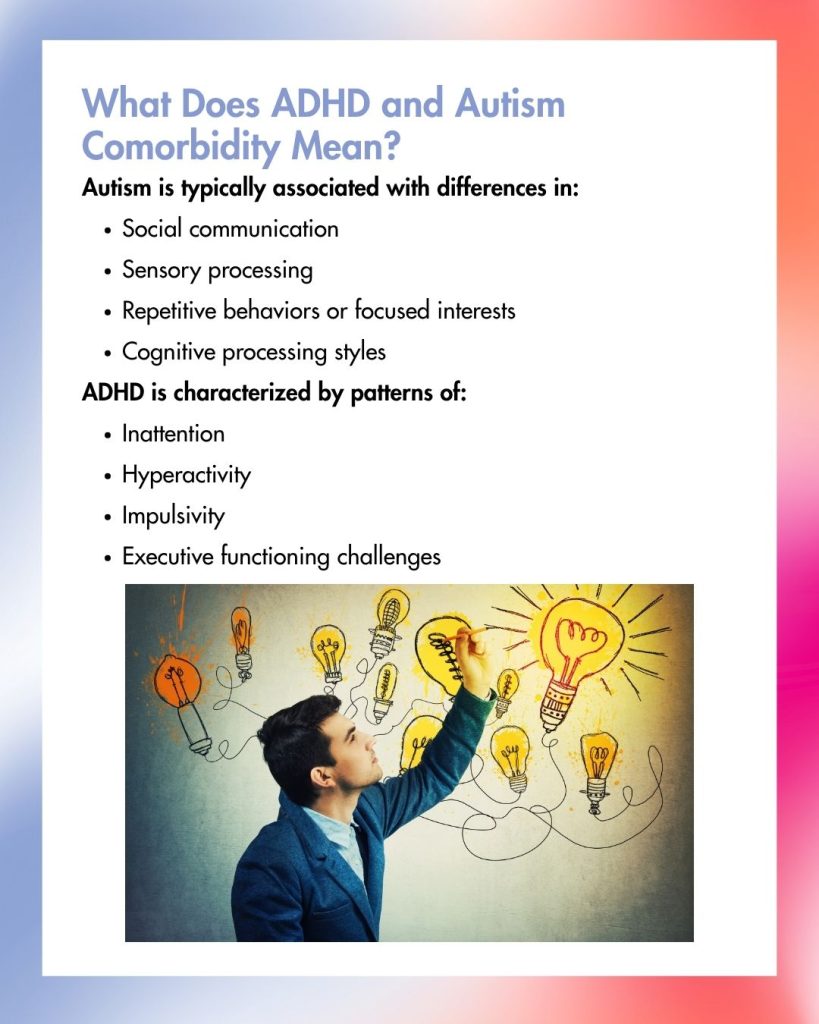
What Does ADHD and Autism Comorbidity Mean?
Comorbidity simply means that two conditions occur in the same individual.
Autism and ADHD share some overlapping characteristics but also present in different ways.
Autism is typically associated with differences in:
- Social communication
- Sensory processing
- Repetitive behaviors or focused interests
- Cognitive processing styles
ADHD is characterized by patterns of:
- Inattention
- Hyperactivity
- Impulsivity
- Executive functioning challenges
When both are present, students may experience a combination of attention challenges, sensory sensitivities, and differences in learning and communication styles.
How ADHD May Present in Autistic Students
Students who have both autism and ADHD may demonstrate behaviors such as:
- Difficulty sustaining attention during lessons or tasks
- Frequent movement or restlessness
- Impulsive responses or interruptions
- Challenges with organization and task completion
- Difficulty transitioning between activities
- Sensory overload combined with distractibility
- Intense focus on preferred interests but difficulty engaging in non-preferred tasks
It’s important to understand that these behaviors are not signs of laziness or defiance. Instead, they reflect neurological differences in attention, processing, and regulation.
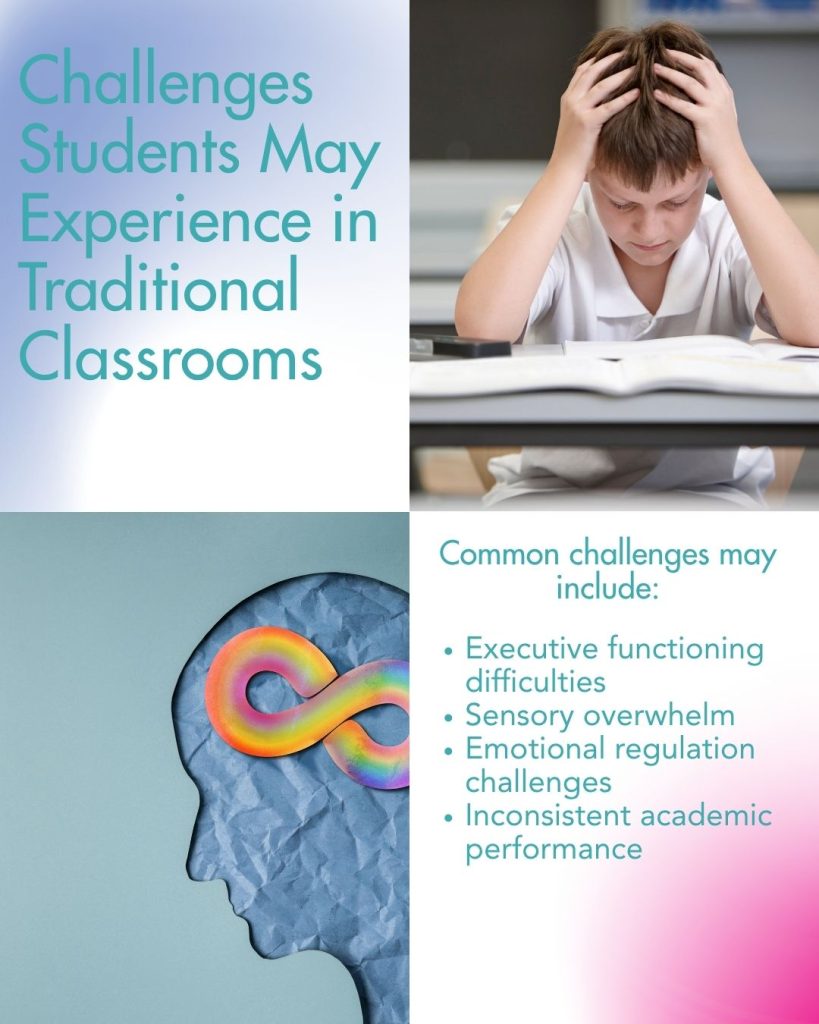
Challenges Students May Experience in Traditional Classrooms
For students with both ADHD and autism, traditional classroom environments can sometimes present barriers to learning.
Large classrooms, rigid schedules, and limited flexibility may make it difficult for students to stay regulated and engaged.
Common challenges may include:
Executive functioning difficulties
Students may struggle with planning, organization, and completing multi-step assignments.
Sensory overwhelm
Busy classrooms can create sensory overload, making focus and participation harder.
Emotional regulation challenges
Impulsivity combined with sensory stress may lead to frustration or emotional shutdown.
Inconsistent academic performance
Students may demonstrate strong understanding but struggle with completing assignments or maintaining attention.
These challenges often lead families to explore alternative or specialized educational environments that better support neurodivergent learners.
Strengths of Neurodivergent Learners
While discussions about ADHD and autism often focus on challenges, it is equally important to recognize the strengths many neurodivergent students bring to learning environments.
Students with ADHD and autism frequently demonstrate:
- Creative and innovative thinking
- Deep curiosity about topics of interest
- Strong pattern recognition
- Persistence in areas they are passionate about
- Unique problem-solving approaches
When students are supported in environments that recognize these strengths, their engagement and confidence can grow significantly.
What Supportive Learning Environments Look Like
Students with ADHD and autism often benefit from learning environments that are flexible, structured, and responsive to individual needs.
Helpful supports may include:
Small group instruction
Smaller classrooms allow educators to provide individualized support and guidance.
Movement-friendly learning spaces
Opportunities for movement help many students regulate attention and energy.
Hands-on and project-based learning
Experiential learning allows students to engage with material in meaningful ways.
Clear structure and visual supports
Predictable routines and visual schedules help students manage transitions and expectations.
Sensory-aware classrooms
Providing quiet spaces and sensory tools can help prevent overwhelm.
How Embrace Learning Institute Supports Students with ADHD and Autism
At Embrace Learning Institute (ELI), we understand that no two students learn the same way. Our educational approach is designed to support students whose needs may not always be met in traditional classrooms.
ELI emphasizes:
- Small class sizes
- Hands-on and project-based learning
- Individualized instruction
- Movement-friendly classrooms
- Collaborative support between educators, families, and specialists
Rather than expecting students to adapt to rigid systems, ELI focuses on creating learning environments that adapt to the student.
By meeting students where they are developmentally and academically, we help them build confidence, develop self-advocacy skills, and rediscover curiosity in learning.
When Families Begin Exploring New Educational Options
Many families begin researching specialized learning environments when they notice that their child is:
- Feeling overwhelmed or disengaged in school
- Struggling with attention or sensory challenges
- Not receiving adequate support for their learning profile
- Demonstrating strong abilities but inconsistent academic performance
Understanding the relationship between ADHD and autism can be an important step in identifying the types of environments that may help students succeed.
ADHD and autism frequently occur together, creating a unique learning profile that deserves thoughtful support and understanding.
When students are provided with the right learning environment, individualized instruction, and opportunities to explore their strengths, they are capable of remarkable growth.
At Embrace Learning Institute, we believe that education should adapt to the student — not the other way around. By supporting neurodivergent learners with flexible, hands-on approaches, we help students build the skills, confidence, and curiosity they need to thrive both in and beyond the classroom.